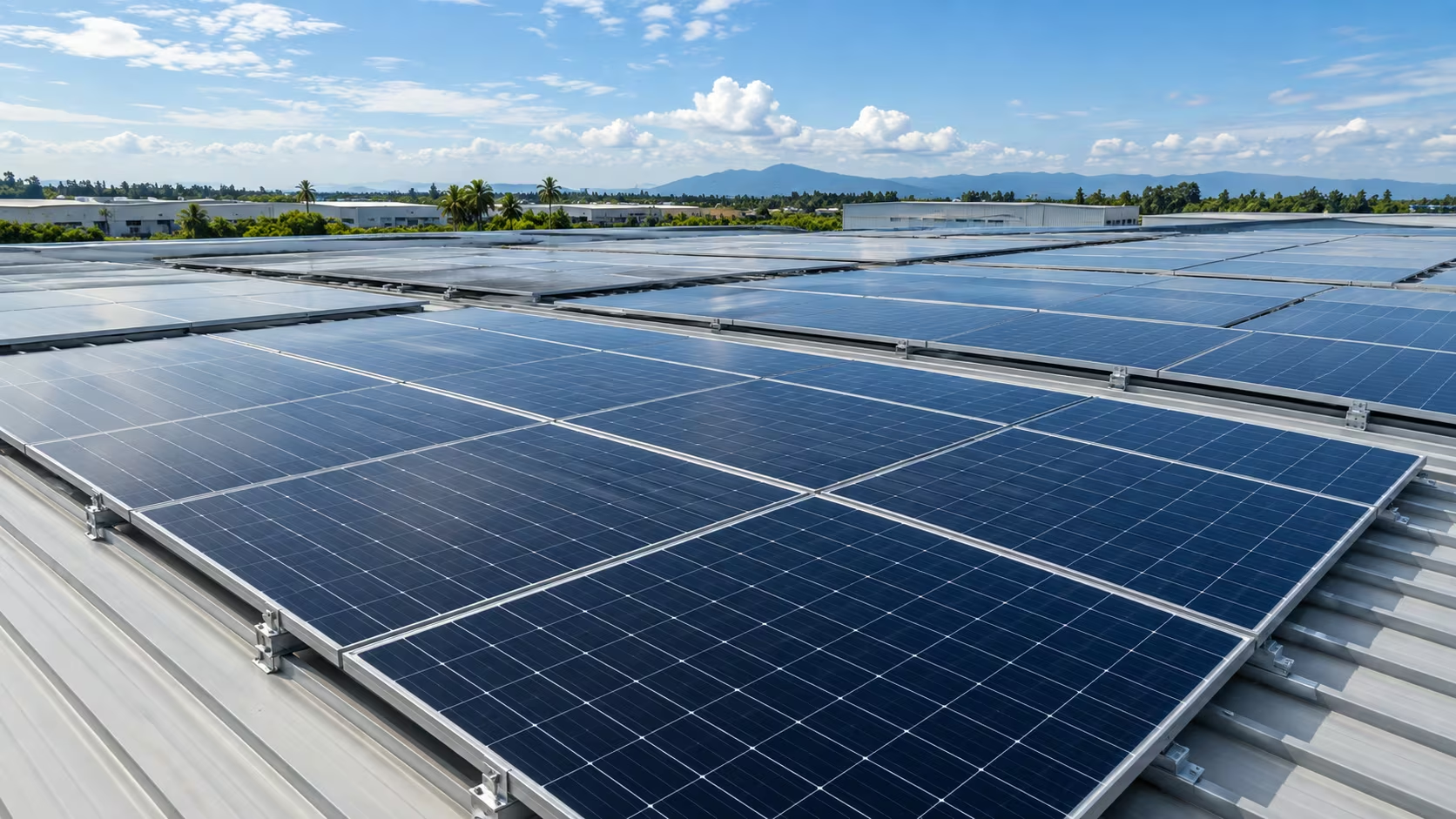
Illustrative solar PV array on an industrial roof

Built to hold
the sun.

AI-generated illustration

Sunrise Prima Sdn Bhd

The structure
behind solar power.

Sunrise Prima provides engineered solar mounting structures for solar PV installations in Malaysia. Established as Superdaya Group’s solar arm in 2023, Sunrise Prima works in strategic collaboration with Solar Sentinel, combining structural engineering expertise with solar system design to support reliable and durable renewable energy installations.

Explore the presentation
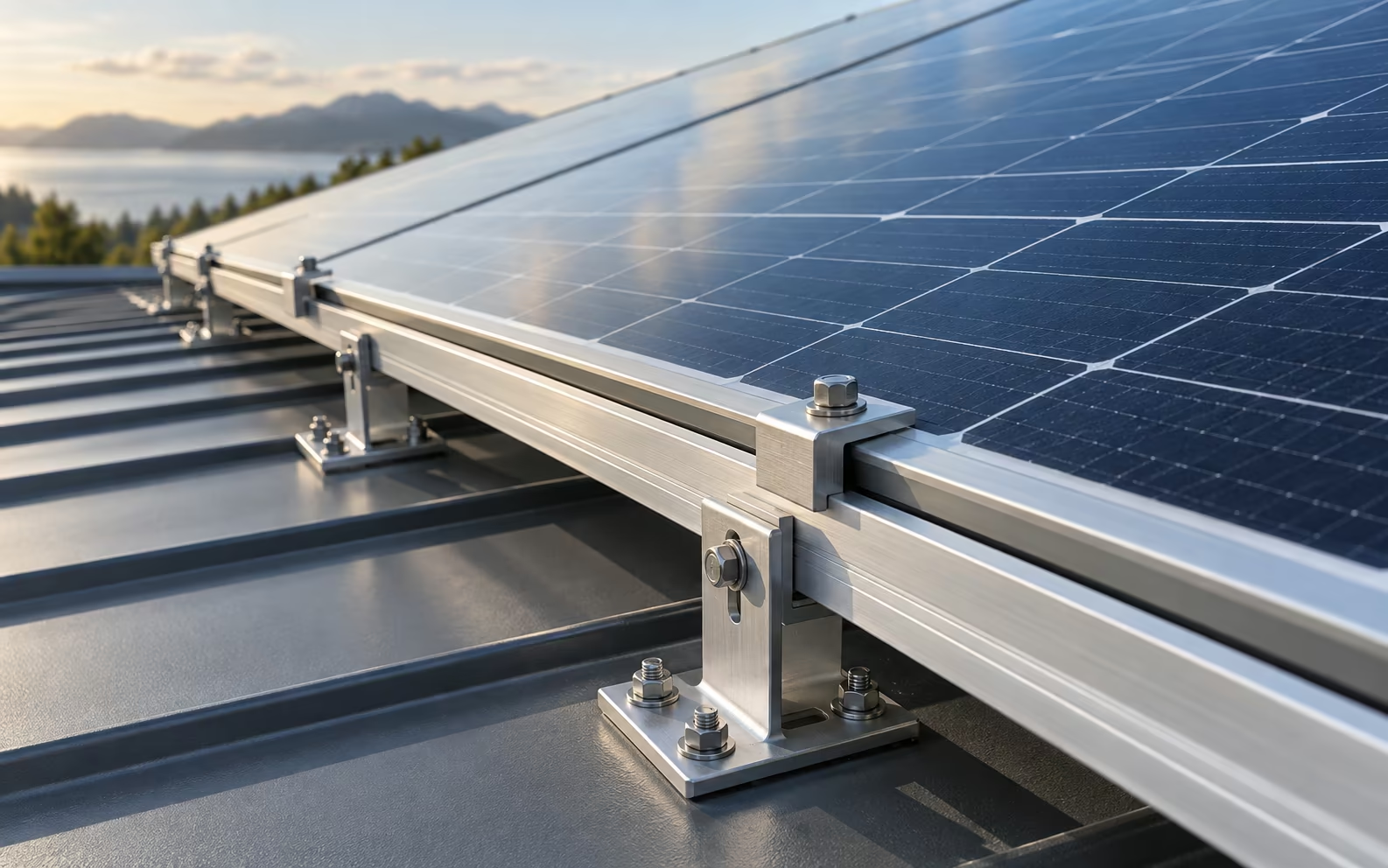
Illustrative close-up of solar mounting rails, clamps and brackets
AI-generated illustration

A shared
energy ambition.

Sunrise Prima was established in 2023 to support Malaysia’s growing renewable energy sector with solar mounting structures.

Through a strategic collaboration with Solar Sentinel, Sunrise Prima combines structural engineering expertise with solar system design, supporting efficient and dependable solar mounting solutions.

Discuss a solar project

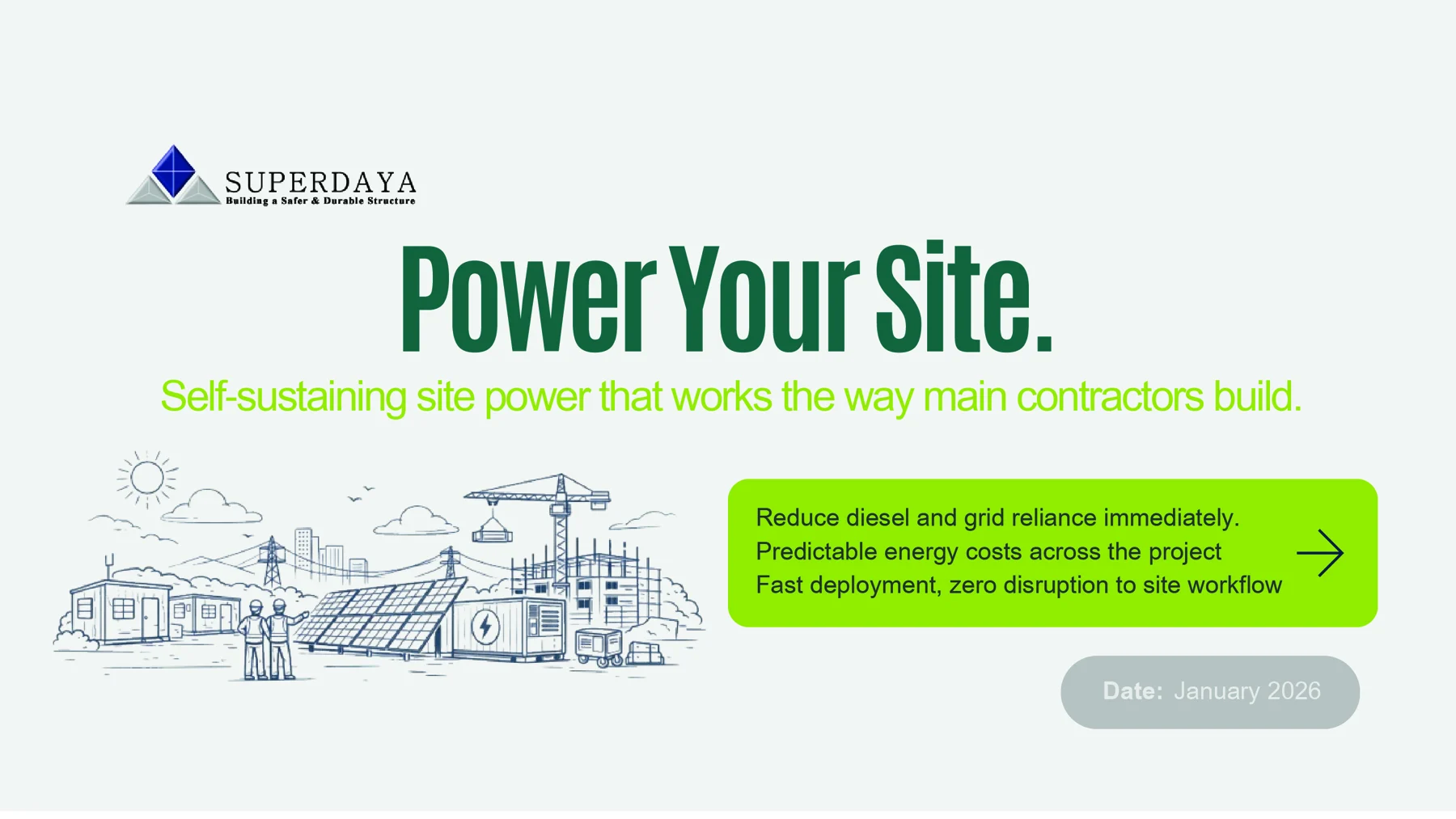
Power your site.

Explore the solar presentation from Superdaya’s website.

The presentation includes illustrative operating models and calculations. Project sizing, commercial terms and savings need a site-specific assessment.

Power your site — Superdaya solar presentation

1 / 14 — Power your site

Open individual slides at full size

Inside the
solar proposal.

A text guide to Superdaya’s “Power Your Site” presentation.

The January 2026 presentation uses illustrative models and calculations. Confirm system design, applicable tariffs, commercial terms and approvals for your own site.

01 Two ways to power a site

The presentation discusses reducing reliance on diesel generators and grid electricity, managing recurring energy costs, and limiting noise, emissions and downtime. Predictable energy costs and convenient deployment are intended benefits, rather than measured results for a named project.

Self-sustaining site

Model A connects solar PV panels, battery storage and an inverter to construction-site loads. Solar supplies daily operations while the battery stores excess energy for night-time and low-sun periods.

Superdaya positions this model for long-duration or remote construction projects, with the aim of reducing grid and diesel reliance, noise, emissions and fuel logistics.

Peak shaving

Model B uses solar to offset daytime demand, with battery discharge during high-load periods to cap maximum demand. The presentation assumes weekday peak hours of 2pm–10pm.

The model is presented for grid-connected sites with high peak usage. Changes in capacity or network charges, genset runtime and fuel use depend on the site and its applicable tariff.

The source identifies night-time operations, site location, equipment use, offices and workers’ quarters, cleaning and concrete-related activities as electricity-use drivers. Its chart uses indicative relative impact rather than metered consumption, and attributes its normalised scores to Esmaeilifar et al. (2015).

02 A worked energy example

Estimate daily energy use

Slide 6 assumes a medium-sized construction site with 100–200 workers. This is a worked example, not a standard system specification.

Daily energy example from Superdaya’s presentation
Equipment or usePowerDaily useDaily energy
Site office: lights, computers and AC5 kW12 hours60 kWh
Worker quarters: lights, fans and small appliances10 kW12 hours120 kWh
Portable tools and small machinery10 kW6 hours60 kWh
Water pump and cleaning5 kW6 hours30 kWh
Security lighting2 kW12 hours24 kWh
Total estimated daily energy294 kWh/day

The presentation rounds this example up to approximately 300–350 kWh/day for safety and future expansion.

Estimate solar PV capacity

Slide 7 uses about 4–5 peak sun hours per day in Malaysia and allows approximately 20% system losses from the inverter, wiring, dust and other factors. Its formula divides daily energy by peak sun hours multiplied by efficiency.

350 kWh/day ÷ (4.5 hours/day × 0.8) ≈ 97.2 kW

The presentation rounds this to a 100 kW solar PV example. Its illustration labels a 330 Wp module measuring 1.0 m × 1.7 m and an array footprint of 27.2 m × 19 m. These are illustrative dimensions, not a project layout.

Consider battery storage

Slide 8 assumes two days of autonomy: 350 kWh/day × 2 days = 700 kWh. It separately discusses lithium-ion batteries at 90% depth of discharge and lead-acid batteries at 50%, with an approximately 1,400 kWh lead-acid example.

The source does not clearly distinguish usable from nominal capacity in its lithium-ion example. Confirm battery capacity, depth of discharge and reserve requirements with the project designer before sizing a system. The illustrated battery container is labelled 6.05 m × 2.43 m × 2.89 m.
03 Buy, lease and project support
Commercial models described in slide 10
BuyLease
Asset ownershipProject-based pricing
Positioned for long-term cost savingsPositioned for lower upfront cost
Suited to repeated use across sitesSuited to short or one-off projects

Ask Superdaya which options are available and request pricing and terms for your project.

Planning and coordination

The presentation describes local support, practical site advice, one coordination point, configurations to match the bill of quantities, documentation for architects and consultants, and multiple brands. It discusses temporary and mobile sites, relocation between projects, and plug-and-play deployment.

Intended benefits include more predictable energy costs, stable power for equipment and offices, sustainability information to support tenders and approvals, and reduced noise and emissions. These are the presentation’s aims, not guaranteed tender outcomes or project performance.

04 What needs a site assessment?

Design around real conditions

Superdaya’s presentation says performance depends on panel orientation, shading, dust, peak loads such as welding machines and high-power tools, seasonal variation and rainy days. It discusses a hybrid system with a small diesel or genset backup as an option for construction sites.

Agree the installation programme

The setup slide covers site preparation, installation and commissioning, approval considerations and power availability aligned with the construction programme. It does not establish a quantified installation duration. Confirm preparation, approvals, delivery and commissioning requirements with the team.

Contact Superdaya with the site location, expected loads and project requirements to discuss the next step.

Discuss your site
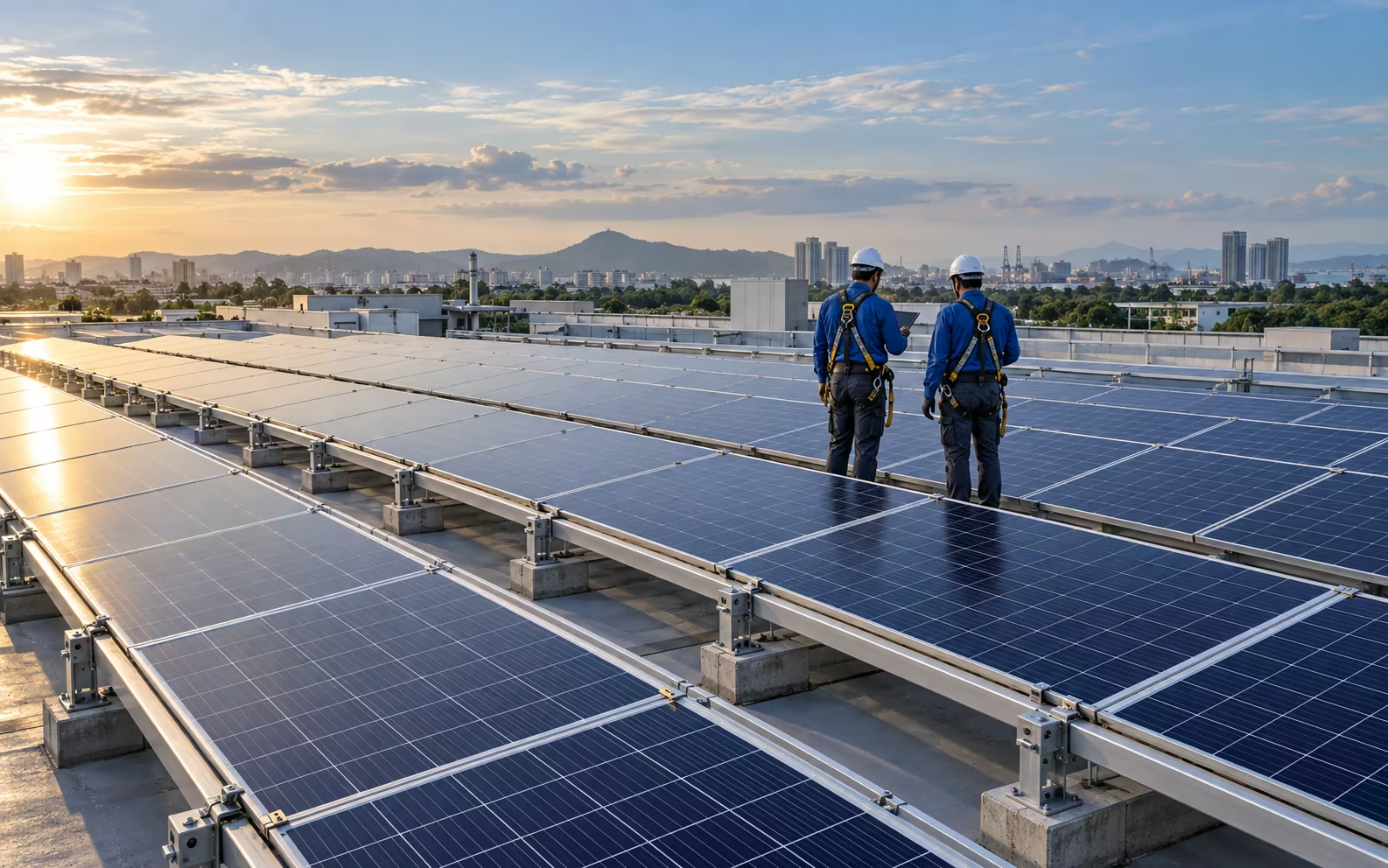
Illustrative solar technicians checking a rooftop PV array
AI-generated illustration

Let’s talk
solar.

Contact Superdaya for roofing, steel profiles or solar mounting structures. Share your project location and the work you have in mind.

Start a conversation

Shaping tomorrow.